
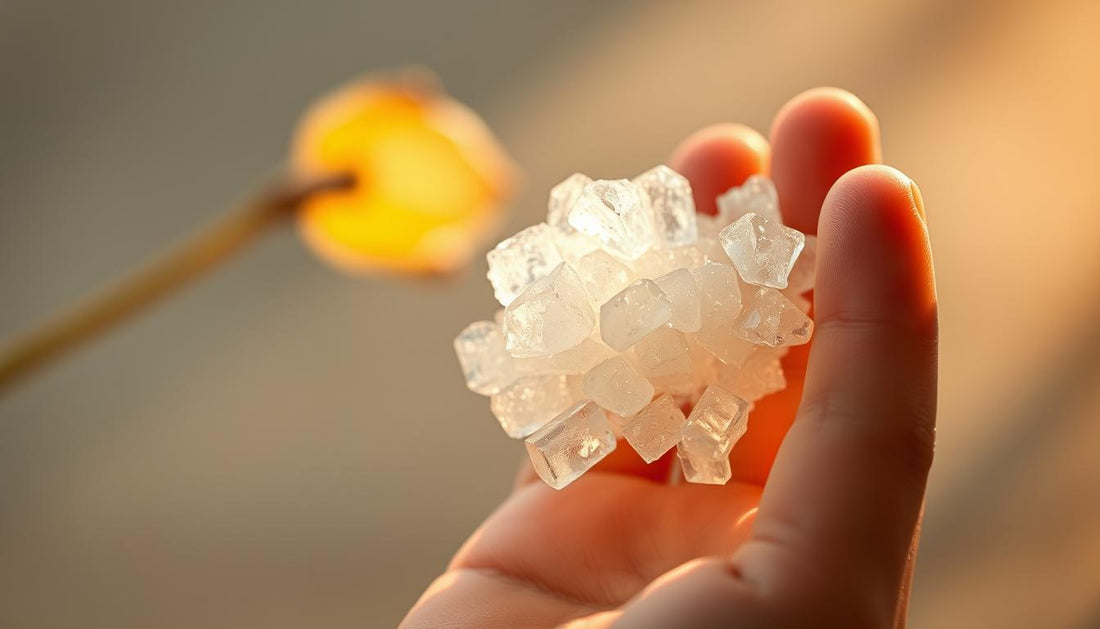
The ultimate guide to Allulose
Short answer: allulose is a rare sugar that tastes like sugar and is used in US keto products, but it is not authorised as a novel food in Great Britain, so you can’t legally buy it as food in UK shops. The UK application (RP-1130) is still at the risk assessment stage. In the UK, monk fruit decoction, erythritol and stevia are the permitted alternatives, including our monk fruit sweetener range.

What is allulose?
Allulose (also called D-psicose or D-allulose) is a simple sugar with almost the same structure as fructose. It is called a “rare sugar” because it occurs naturally only in small amounts, for example in figs and raisins. Commercial allulose is made from fructose using enzymes. It is roughly 70% as sweet as table sugar.
In the US, the US FDA labelling guidance (October 2020) allows food companies to leave allulose out of the “Total Sugars” and “Added Sugars” figures on a label and to count it at 0.4 calories per gram, compared with about 4 for sugar. That is why it has become popular in American keto and low-sugar products.
UK status in one line: allulose has not been authorised as a novel food in Great Britain, so it can’t legally be sold as food here.
Why is allulose banned in Europe and the UK?
Strictly speaking, allulose isn’t banned; it just hasn’t been approved. Any food that wasn’t eaten to a significant degree before 15 May 1997 counts as a novel food. A novel food needs a safety assessment and an authorisation before it can be sold.
- Great Britain: the application to authorise allulose is listed on the FSA and FSS register of regulated product applications (RP-1130) as “in progress”, at the risk assessment stage. Until an authorisation is granted, allulose can’t be legally sold as food in England, Scotland or Wales.
- European Union: the EU runs its own separate novel food system. Allulose isn’t on the EU’s list of authorised novel foods, and applications there are still being considered.
What would change it? If the safety assessment is completed and ministers authorise allulose, it would be added to the GB list of authorised novel foods with conditions of use, and UK shops could then stock it. There is no published timetable.

Can you buy allulose in the UK?
Not legally from UK food retailers. Because allulose isn’t authorised in Great Britain, UK shops and food businesses can’t sell it as a food or use it as an ingredient. Some overseas websites will post it, but that doesn’t make it authorised here, and we don’t recommend importing unauthorised food ingredients.
The honest answer for UK bakers is to use a permitted sweetener instead. Monk fruit made by traditional decoction is a good example: non-selective water decoctions of monk fruit were confirmed by the Food Standards Agency in June 2024 (and by Food Standards Scotland) as not novel, which means they can be sold here. Our guide is monk fruit legal in the UK? explains the detail.
Allulose nutrition: carbs and calories per 100g
| Per 100g | Allulose (US labelling) | Table sugar |
|---|---|---|
| Energy | 40 kcal (0.4 kcal/g FDA factor) | about 394 kcal |
| Carbohydrate | 100g (listed under total carbohydrate) | 100g |
| Counted in “sugars”? | No (FDA allows exclusion) | Yes |
| Sweetness vs sugar | about 70% | 100% |
Allulose figures follow the US FDA guidance. Sugar energy: McCance and Widdowson’s Composition of Foods (CoFID). Allulose isn’t authorised in Great Britain, so there is no UK labelling convention for it yet.
Is allulose keto friendly?
In the US, allulose is treated as keto-friendly by most brands because they subtract it when they calculate net carbs. Strictly, it is still a carbohydrate and appears under total carbohydrate on a US label, so if you track carbs closely, check how a brand gets to its net carb figure.
Like other sugar replacers, allulose can cause digestive discomfort for some people if eaten in large amounts. For UK readers, the practical point is simpler: it isn’t authorised here, so it isn’t an option for your shopping basket.
How allulose is used
- Taste: usually described as clean and sugar-like, without the bitterness some stevia products have or the cooling note of erythritol.
- Sweetness: about 70% as sweet as sugar, so US recipes often use a little more allulose than sugar.
- Browning: it browns and caramelises, and quite quickly, so US bakers often lower the oven temperature slightly.
- Texture: it holds moisture, which keeps bakes soft and stops ice cream from freezing rock hard.
Allulose vs monk fruit, erythritol and stevia
| Sweetener | Sweetness vs sugar | Good for | Sold in the UK? |
|---|---|---|---|
| Allulose | about 70% | Browning, soft bakes, ice cream | No, not authorised |
| Monk fruit decoction | Varies by product (our pure powder is about 3×) | Drinks, baking (usually blended) | Yes |
| Erythritol | about 60–80% | Bulk 1:1 baking swaps | Yes |
| Stevia | Many times sweeter, used in tiny amounts | Drinks, blends | Yes |
For the head-to-head comparisons, see allulose vs monk fruit and monk fruit vs erythritol. For the whole range of options, see our keto sugar substitute guide and our monk fruit sweetener guide.
UK alternatives to allulose for baking and drinks
- For a 1:1 swap in baking: Monk Fruit Decoction & Erythritol Sweetener measures spoon-for-spoon like sugar.
- For drinks without erythritol: Monk Fruit Decoction Powder (No Erythritol) is made from monk fruit decoction and soluble tapioca fibre and is about 3× sweeter than sugar, according to the product page.
- For an everyday white-sugar alternative: Granulated Erythritol & Stevia Blend, which swaps 1:1 for sugar.
Looking for a sweetener you can buy here?
Allulose isn’t sold in the UK, but monk fruit decoction is. Browse our monk fruit sweeteners, from a 1:1 baking blend to a pure decoction powder for drinks.
Frequently asked questions
Why is allulose banned in Europe?
Allulose isn’t banned as such; it simply hasn’t been authorised. It was not eaten in significant amounts before May 1997, so it counts as a novel food and needs a safety assessment and approval before it can be sold. In Great Britain that application, RP-1130, is still at the risk assessment stage.
Is allulose banned in the UK?
It isn’t authorised for sale as a food in Great Britain. Allulose is a novel food, and the application to approve it (RP-1130) was still at the risk assessment stage on the FSA and FSS register in October 2026. Until it is authorised, UK shops and food brands cannot legally sell it as food.
Can you buy allulose in the UK?
Not legally from UK food retailers, because allulose has not been authorised as a novel food in Great Britain. If you want a low-carb sweetener you can buy here, monk fruit decoction, erythritol and stevia are all permitted. Our monk fruit sweeteners and erythritol and stevia blends are made for baking and drinks.
Is allulose keto friendly?
Allulose is widely used in US keto products. The US FDA lets manufacturers exclude it from total and added sugars on labels and count it at 0.4 calories per gram, although it still appears under total carbohydrate. It isn’t authorised in Great Britain, so UK keto bakers usually use monk fruit decoction or erythritol.
Is allulose zero carb?
Not on paper. Allulose is a carbohydrate, and US labels still list it under total carbohydrate. The FDA allows it to be left out of the sugars figures and counted at 0.4 calories per gram, which is why many US brands subtract it when they calculate net carbs. UK labelling rules for it don’t yet apply.
Does allulose have an aftertaste?
Allulose is usually described as having a clean, sugar-like taste with no bitterness or cooling effect, and it is roughly 70% as sweet as sugar. That taste is a big part of its appeal in the US. In the UK, monk fruit decoction blends are the closest option you can actually buy.
Do you count allulose carbs on keto?
Most US keto brands subtract allulose when calculating net carbs, because the FDA lets it be excluded from total and added sugars and counted at 0.4 calories per gram. It still sits within total carbohydrate on a US label. If you track strictly, check how the brand calculates its net carb figure.
The bottom line
Allulose is a sugar-like sweetener that’s popular in the US, but it hasn’t been authorised as a novel food in Great Britain. Its application is still being assessed, so you can’t legally buy it as food in UK shops. If you’re baking or sweetening drinks on a low-carb diet in the UK, monk fruit decoction, erythritol and stevia are the permitted options.


