
Oat Fibre vs Bamboo Fibre: What's the Difference for Keto?
What's the difference between oat fibre and bamboo fibre? Mainly the plant. Oat fibre is milled from oat hulls, and bamboo fibre is made from bamboo. On our pack labels both are almost pure fibre, at 90.1g and 96g per 100g, with 0.1g of carbs or less. In keto baking they're used in a similar way, so the best choice is usually the one your recipe was tested with.
At a glance
- <0.1g vs 0.1gcarbs per 100g in our oat fibre and bamboo fibre (pack labels)
- 90.1g vs 96gfibre per 100g in our oat fibre and bamboo fibre
- 180 vs 192kcalper 100g, because UK labels count fibre at 2kcal per gram
- 70.7gcarbs per 100g in porridge oats (CoFID), so oat fibre isn't the same as oats
On this page
What's the difference between oat fibre and bamboo fibre, and does it matter which one you use for keto baking? Both are fine, light powders that add bulk to low-carb bakes with almost no carbs. This guide compares them using the nutrition tables on our own packs, shows how they stack up against oats and ordinary flour, and explains how to bake with them and when you can swap one for the other.
What's the difference between oat fibre and bamboo fibre?
The biggest difference is where they come from. Oat fibre is made by milling the hull, the tough outer layer of the oat grain. Bamboo fibre is made from the bamboo plant. Once they're processed into a powder, they're very similar:
- Fibre: our labels list 90.1g per 100g for oat fibre and 96g for bamboo fibre.
- Carbs: under 0.1g per 100g for oat fibre and 0.1g for bamboo fibre.
- Fat and protein: under 0.1g for oat fibre and 0g for bamboo fibre.
- Taste: both are described as neutral-tasting, on the oat fibre pack and the bamboo fibre product page.
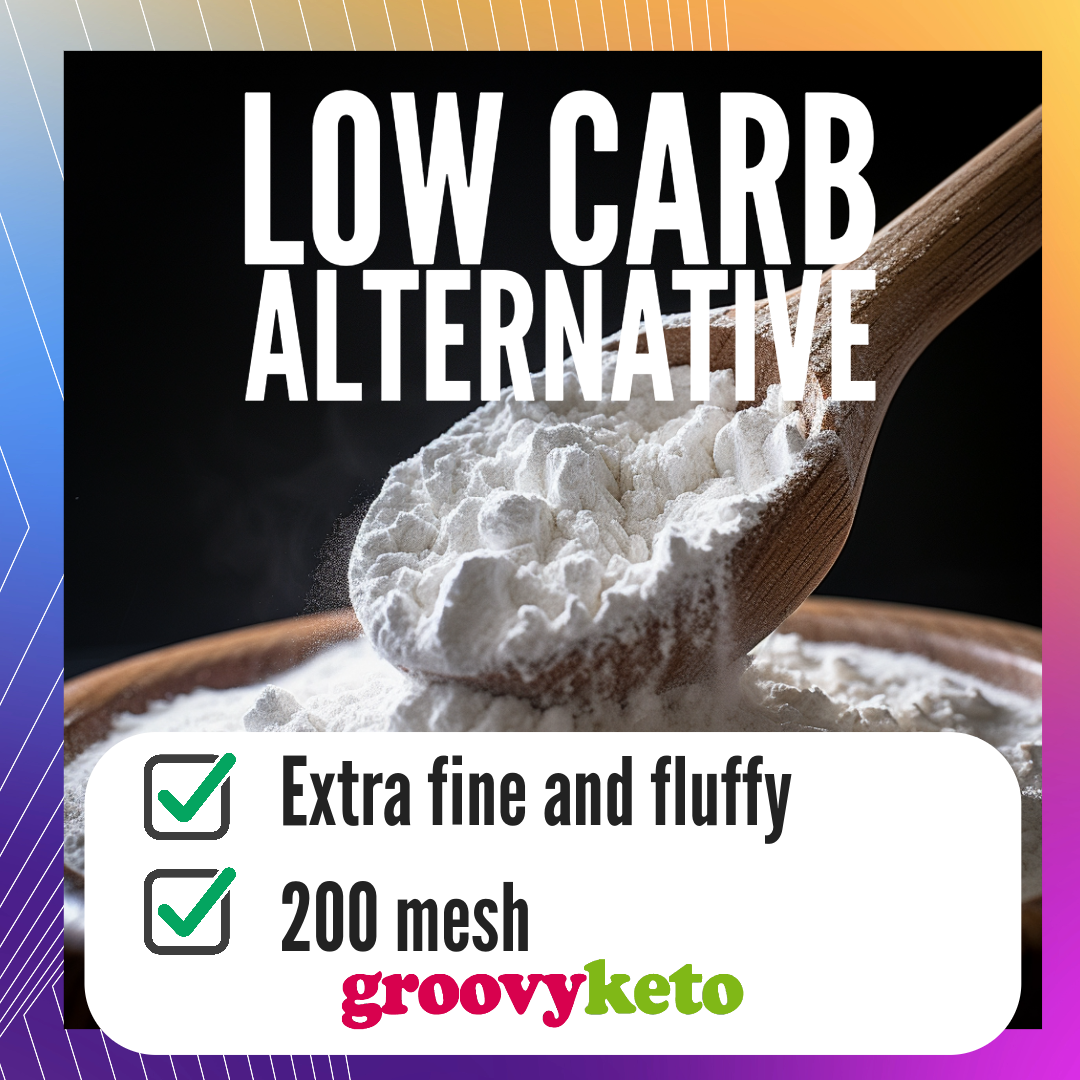
- Texture: both are very light and fluffy, so both packs advise weighing them rather than using cup measures.
In practice, the difference you're most likely to notice is in a recipe that was developed with one of them. Fibre powders soak up different amounts of liquid, so the one a recipe was tested with will give the most predictable result.
What is oat fibre?
Oat fibre is a fine, very white powder milled from oat hulls. It isn't oat flour or oat bran, which come from the grain itself and contain much more starch. Our pack says the fibre "has been processed so that almost all non-fibre components, fats and carbohydrates have been removed", and its only ingredient is 100% oat fibre powder.
That's why the label lists 90.1g of fibre and under 0.1g of carbohydrate per 100g. Porridge oats, by comparison, have 70.7g of carbs per 100g in CoFID, the UK government's food composition dataset. Our guide to what oat fibre is covers how it's made and used in more detail.
What is bamboo fibre?
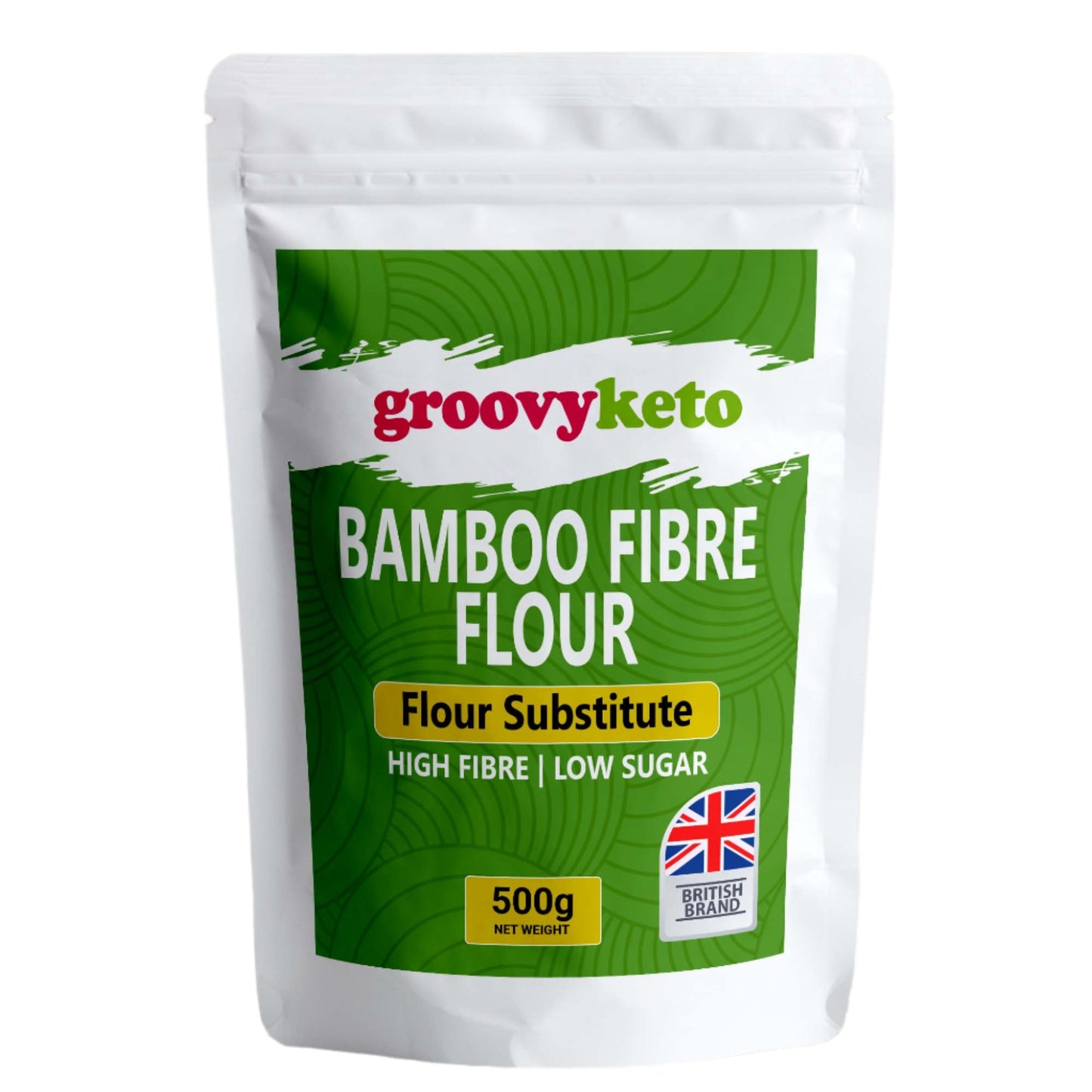
Bamboo fibre is a plant fibre made from bamboo and milled into a very light, airy powder. Our pack lists one ingredient, 100% bamboo fibre powder, and says it's "processed to eliminate all non-fibre constituents, fats, and carbohydrates".
Its label lists 96g of fibre and 0.1g of carbohydrate per 100g, with 0g of fat and protein. Like oat fibre, it's used in keto bread, muffins and pancakes to add bulk and a softer, more flour-like texture.
Oat fibre vs bamboo fibre: nutrition per 100g
These figures are from the nutrition tables on our own packs. Other brands may differ, so check the label on the pack you buy.
| Per 100g | Oat fibre | Bamboo fibre |
|---|---|---|
| Energy | 180kcal | 192kcal |
| Carbs | <0.1g | 0.1g |
| Fibre | 90.1g | 96g |
| Fat | <0.1g | 0g |
| Protein | <0.1g | 0g |
| Salt | 0.88g | 0.19g* |
From the Groovy Keto Oat Fibre and Bamboo Fibre pack labels, checked 30 October 2026. *The bamboo fibre label lists 0.076g of sodium. Salt is sodium × 2.5.
Why do they have calories if they have no carbs?
UK labelling rules give fibre an energy value of 2kcal per gram, and fibre is listed on its own line rather than inside the carbohydrate figure. So a powder that's 90–96% fibre comes out at around 180–192kcal per 100g, even with almost no carbs. Recipes use small amounts, though. A 10g portion is about 18kcal of oat fibre or 19kcal of bamboo fibre.
Do you need to subtract the fibre?
No. On UK labels, the carbohydrate figure already leaves out fibre, so the carbohydrate line is effectively the net carb figure. For both of these powders, that's 0.1g per 100g or less. Our guide to net carbs on UK food labels explains how this works, and our guide to insoluble fibre on keto covers the different types of fibre.
How they compare with oats and flours
Here's how the two fibres compare with the oats, nuts and flour they're often used alongside or instead of. The oats, almonds and flour figures are from CoFID 2021.
| Per 100g | Carbs | Fibre |
|---|---|---|
| Oat fibre (ours) | <0.1g | 90.1g |
| Bamboo fibre (ours) | 0.1g | 96g |
| Porridge oats | 70.7g | 7.8g |
| Ground almonds | 6.9g | 7.4g* |
| Plain white flour | 80.9g | 4.0g |
Fibre powders from our pack labels. Others from CoFID 2021, food codes 11-788, 14-870 and 11-886. *CoFID gives ground almonds a fibre figure measured by an older method (non-starch polysaccharide), so it isn't directly comparable.
The fibre powders are far lower in carbs than any flour, but they aren't a flour replacement on their own. They add bulk and lightness but very little structure, which is why keto recipes pair them with ground almonds and a binder. See our guide to almond flour and ground almonds for more on the base most keto bakes start with.
Baking with oat fibre and bamboo fibre
Both fibres do the same main job in keto baking. They bulk out a dough or batter made mostly from ground almonds, so the bake is lighter and more like one made with wheat flour. A few tips that apply to both:
- Weigh it. Both are so light that a spoon or cup measure can be well out, and both of our packs advise weighing.
- Use it alongside other flours. Most recipes use a small amount with ground almonds or coconut flour, rather than as the main flour.
- Add a binder. Pair it with psyllium husk powder, xanthan gum or eggs to hold the bake together.
- Allow for extra liquid. Fibre soaks up water, so a dough can firm up quickly. Follow your recipe, and add liquid a little at a time if you're adapting one.
- Store it dry. Both packs say to keep it in a cool, dry place away from moisture.
How much do recipes use?
Not much. Our keto bread recipe uses 50g of oat fibre with 200g of ground almonds and 60g of psyllium husk powder baked in a 900g (2lb) loaf tin. Our keto shortbread uses just 15g of oat fibre with 200g of ground almonds. At under 0.1g of carbs per 100g, the 50g in the loaf adds less than 0.05g of carbs to the whole thing.
| Amount | Carbs | Fibre | Energy |
|---|---|---|---|
| 10g oat fibre | <0.01g | 9.0g | 18kcal |
| 10g bamboo fibre | 0.01g | 9.6g | 19kcal |
| 15g oat fibre | <0.02g | 13.5g | 27kcal |
| 50g oat fibre | <0.05g | 45.1g | 90kcal |
Calculated from our pack labels per 100g. The 15g and 50g amounts are from our shortbread and bread recipes.
If you're new to low-carb baking, our keto baking for beginners guide explains what each ingredient does and how much to use.
Can you swap oat fibre and bamboo fibre?
Usually, yes. They're used in a similar way, so if a recipe calls for one and you have the other, start with the same weight. Then:
- Watch the liquid. Add any extra water or milk a little at a time, as the two may absorb slightly different amounts.
- Expect a small change in texture. The crumb may be a little softer or drier than the original.
- Test a small batch first if it's a recipe you bake often.
Don't swap either one for oat flour, oat bran or wheat bran, though. Those contain much more starch, so they'd add far more carbs. And don't swap them for psyllium husk powder or xanthan gum, which bind a dough rather than bulk it out.
Other low-carb baking fibres
Oat and bamboo fibre are bulking fibres. Other low-carb baking ingredients do different jobs, so they're usually used alongside them rather than instead:
- Psyllium husk powder. A binder. Mixed with water, it forms a gel that holds keto bread together and gives it a flexible crumb. Our psyllium husk powder lists 3g of carbs per 100g. Read our psyllium husk powder guide, or see how it compares in psyllium husk instead of xanthan gum.
- Ground flaxseed (linseed). Adds moisture and helps bind, with a nutty taste and a darker colour. See is flaxseed keto? and is linseed the same as flaxseed?
- Chia seeds. Soak up liquid and form a gel, so they're used in puddings and as a thickener more than in bread.
- Ground almonds. The base of most keto bakes rather than a fibre, at 6.9g of carbs per 100g in CoFID.
Speak to your GP, diabetes nurse or a registered dietitian before you make big changes to your diet. This is especially important if you have diabetes and take insulin or other medicines that can cause hypos, or take SGLT2 inhibitors, as your medication may need to change. The same goes if you're pregnant, breastfeeding or have a history of eating disorders.
Which should you buy?
For carbs, there's no real winner. Both of ours list 0.1g per 100g or less, so either adds almost nothing to a recipe's carb count. Choose by what you bake:
- Following one of our recipes? Our bread and shortbread recipes use oat fibre.
- Following a recipe from elsewhere? Use the fibre it names, as it was tested with that one.
- Adapting your own recipes? Either works as a starting point. Pick one and stick with it, so your results are consistent.
Our oat fibre, bamboo fibre and binders
Both of our fibres come in 500g pouches. Free delivery on orders over £30.


Rather not bake? Our Low Carb Keto Bread is ready-made, and our keto baking mixes are another shortcut.
Key takeaways
- They're very similar. Our labels list 90.1g and 96g of fibre and 0.1g of carbs or less per 100g.
- The plant is the main difference. Oat fibre comes from oat hulls, bamboo fibre from bamboo.
- They do have some calories. UK labels count fibre at 2kcal per gram.
- Use what your recipe says. They can usually be swapped by weight, with the liquid adjusted.
Frequently asked questions
What's the difference between oat fibre and bamboo fibre?
Mainly the plant they come from. Oat fibre is milled from oat hulls, and bamboo fibre is made from bamboo. On our labels both are almost pure fibre, at 90.1g and 96g per 100g, with 0.1g of carbs or less. They look and behave in much the same way in keto baking.
Which is better for keto, oat fibre or bamboo fibre?
Neither is clearly better for carbs. Our labels give oat fibre under 0.1g and bamboo fibre 0.1g of carbs per 100g, so both add almost nothing to a recipe's carb count. Choose the one your recipe was tested with. Our own keto bread and shortbread recipes use oat fibre.
Can I use bamboo fibre instead of oat fibre?
Usually, yes. They're used in a similar way, so start with the same weight and add liquid a little at a time, because fibre soaks up water. The texture may change slightly. For a recipe you bake often, test a small batch first, and always weigh the fibre rather than using cups or spoons.
Do oat fibre and bamboo fibre have calories?
Yes, a few. UK labelling rules count fibre at 2kcal per gram, so our labels list 180kcal per 100g for oat fibre and 192kcal for bamboo fibre. Recipes use small amounts, though. A 10g portion of either is under 20kcal, with less than 0.1g of carbs.
Can oat fibre or bamboo fibre replace flour?
Not on their own. They add bulk and a lighter, flour-like texture but very little structure, so keto recipes combine them with ground almonds and a binder such as psyllium husk or eggs. Our keto bread uses 50g of oat fibre with 200g of ground almonds and 60g of psyllium husk powder.
Sources
- Groovy Keto pack labels and product pages: Oat Fibre and Bamboo Fibre (nutrition per 100g, ingredients, storage and pack size), and Psyllium Husk Powder (carbs per 100g). Checked 30 October 2026.
- Public Health England / Food Standards Agency. Composition of Foods Integrated Dataset (CoFID) 2021: sheet 1.3 Proximates, food codes 11-788 (porridge oats), 14-870 (almonds, flaked and ground) and 11-886 (plain white flour).
- Retained Regulation (EU) No 1169/2011 on food information to consumers: Annex I (definitions of carbohydrate, fibre and salt, including salt = sodium × 2.5) and Annex XIV (energy conversion factors, including 2kcal per gram for fibre), via legislation.gov.uk.
- NHS. How to read food labels.
- Groovy Keto recipes: keto bread and keto shortbread (oat fibre amounts).